
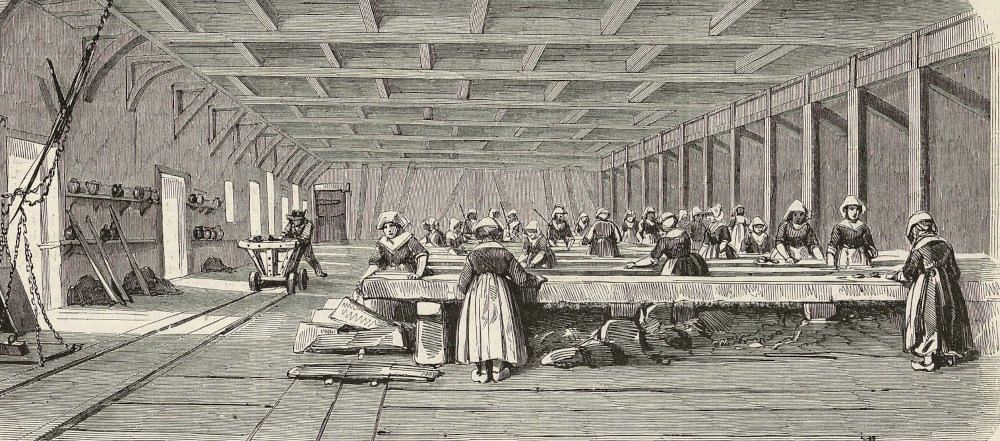
Women were an integral part of the mining workforce at Huelgoat-Poullaouen. Just as in many other mining sites from different periods and in different regions, they were in charge of crushing the ore using hammers and the stamp mill, and especially washing the fragments with water (teenaged girls also helped with this). It was particularly exhausting work: from 8 to 16 hours a day they would wash the ore in freezing water that was highly corrosive, with those crushing the ore continually breathing in rock dust, leading to high levels of tuberculosis.
These terrible working conditions, combined with the low remuneration brought about a unique event in 1767. When management tried to reduce salaries further, the Poullaouen crushers and washerwomen went on strike. Unfortunately we only know of this from the legal notices sent by Parisian shareholders to the on-site directors. These reveal the contempt of the aristocracy for the women on strike, whom they describe as 'animals', as members of ‘the laziest population there has ever been’, and their revolt as a ‘whim’. Despite holding back on their salaries and trying to use the miners and foundry workers to convince their wives to return to work, the female workers stood strong for six weeks, until the Company backed down and agreed to rehire them and pay them their original wages.
This strike took place in a context of rejection of the Company, its values and its foreign managers by the population of Lower Brittany. The revolt was led by an anti-industrialist cleric, who even went as far as organising a strike fund. The pro-rural and partisan nature of the strike made it a pre-industrial revolt, which only partially makes it part of the great movement of the industrial 19th century. However, it may well be the first female strike in history that we know of, though the role of women in pre-industrial workforces would indicate that there were others that we no longer have accounts of, or that we have not been able to study as yet.
Translation: Tilly O'Neill
