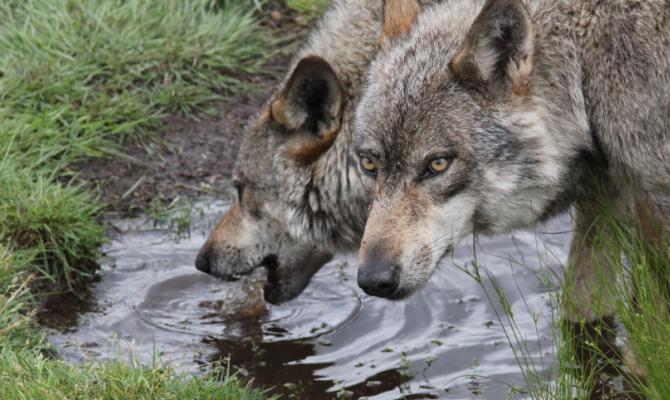
In the labyrinthine maze of the University of Rennes 1 campus, a large Zoology collection hides an unusual specimen: a stuffed wolf. It is most likely one of the last wolves to have been killed in Brittany, at the beginning of the 20th century. But today, the Canis lupus is making a comeback in Brittany’s countryside and people have reported sightings of these furtive and solitary creatures near their homes.
Wolves in the Breton Collective Imagination and Culture
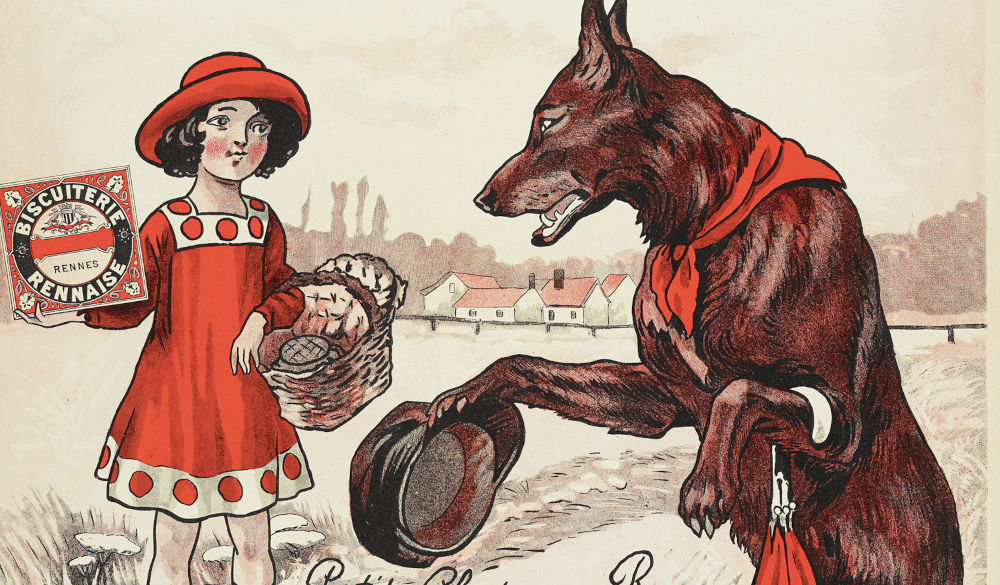
Wolves occupy a special place inside the hearts and minds of those with Breton roots. You only have to look at certain place names to understand their ancient presence in the region. In Lower Brittany, the Breton word for wolf, “Bleiz,” is everywhere. It refers to the animal, but also probably at times, to an outlaw. There are many examples: “Pors Bleiz” (Wolf’s Court), “Goarem ar bleizi” (Wolves’ Wilderness), “Roc’h ar bleiz” (Wolf’s Rock), or “Kerambleiz” (Wolf’s Village). The same is true of Upper Brittany, which boasts village names containing the French word for wolf (loup), such as “Domloup” (taken from Domnus Lupus, meaning Saint Lupus), but also “Le chemin des louveries” (Wolf Way), “La brousse au loup” (Wolf Brush), “Le vau du loup” (Wolf Valley), and even “Le bois du loup” (Wolf’s Wood). Wolves have even inspired a dance in central Brittany: “Dañs ar bleiz”. The Bretons even have a nickname for them - “Gwilhoù ar bleiz” (Little William Wolf) - and they feature in many stories as well. Inspired by a true story from the 16th century, 'The Player and the Wolf' retells the tale, from the Monts d’Arrée to Trégor, of a bombard player who goes in search of a girl who has been kidnapped by a wolf. He falls into the wolf’s trap and finds himself nose to nose with the creature and spends the whole night blowing into his instrument to make the wolf retreat…
Wolf Hunts in the 19th Century
Although wolves have always been a part of the Breton collective imagination, they have been extinct in the region since the beginning of the 20th century. What happened? At the start of the 19th century, it is estimated that around 600 individuals lived in the moorlands and woodlands. The following century marked a turning point. Brittany experienced a huge population increase, especially in the countryside, which in turn reduced the size of the wolf’s natural habitat. Their human neighbours became increasingly afraid of them. It was not rare for a wolf to attack a child tasked with watching over a flock of sheep. The final nail in the coffin came when wolves began to spread a terrible disease: rabies. People used a wide variety of methods to hunt them, especially traps which they became more and more adept at using. In Lower Brittany, some hamlets are in fact called “Toull ar bleiz,” meaning “Wolf pit.” People would also shoot them, thanks to the easing of restrictions on hunting rights, or kill them using a new poison, strychnine, introduced at the end of the 19th century. The last wolf sightings in Brittany were between 1885 and 1906. However, today they’re much easier to keep an eye on, even from a distance! The Atlas des Mammifères de Bretagne (Atlas of Mammals in Brittany) has published an online map that is updated in real time with confirmed sightings.
Translation: Tilly O'Neill